Natalia Nakazawa: We Must Weave Together at the Roots
Curated by Gino Romero
Koda House 407b on Governors Island, New York
July 11 - August 23 2026
Click here for link to Koda House
KODA in New York proudly presents the solo exhibition of Natalia Nakazawa. Nakazawa’s work reflects on diasporic experience, national identity, and the histories/institutions that affect them. We Must Weave Together at the Roots is Nakazawa’s first survey solo exhibition, encompassing several decades of artwork. Spanning painting, textiles, video, ceramics, and socially engaged components, this show explores the ways in which Nakazawa weaves storytelling and archival images with craft and identity to complicate our relationship to home, nations, and the emblems that represent them.
We Must Weave Together at the Roots comes from adrienne maree brown’s a comrade spell for trees, which highlights the importance of care and unity during times of unrest. Nakazawa’s work embodies this gentle call to action by inviting the viewer to follow the woven stories and add to the larger narrative. Through workshops and community engagement, this show creates moments of reflection for the viewer to consider their positionalities in these systems and histories. Through collaborative contemplation on the past and present, Nakazawa creates a space for us to consider what our own tapestries can share or what our own vessels can hold. We Must Weave Together at the Roots alludes to an invitation to unify and also the techniques Nakazawa employs to engage her viewer.
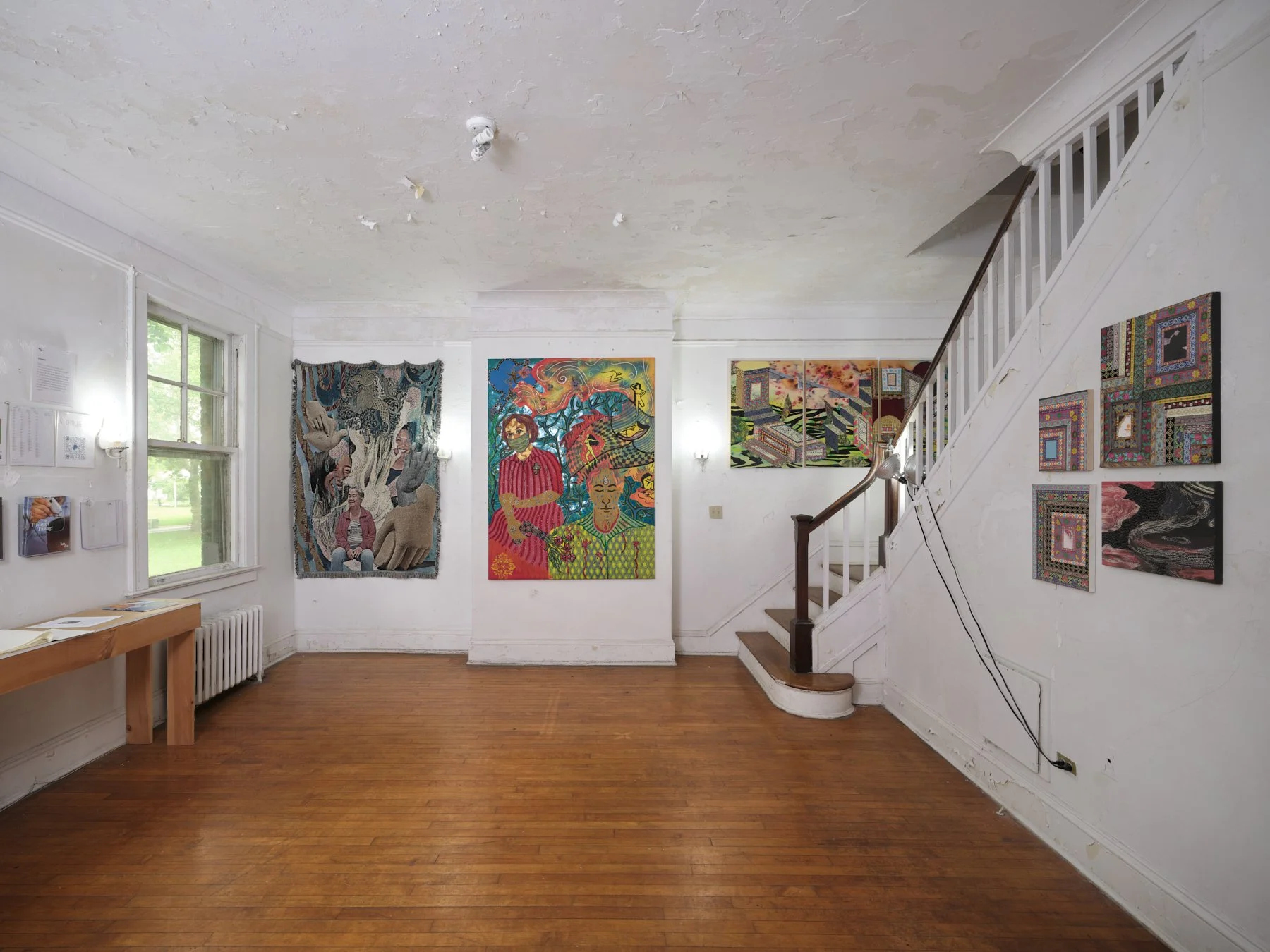
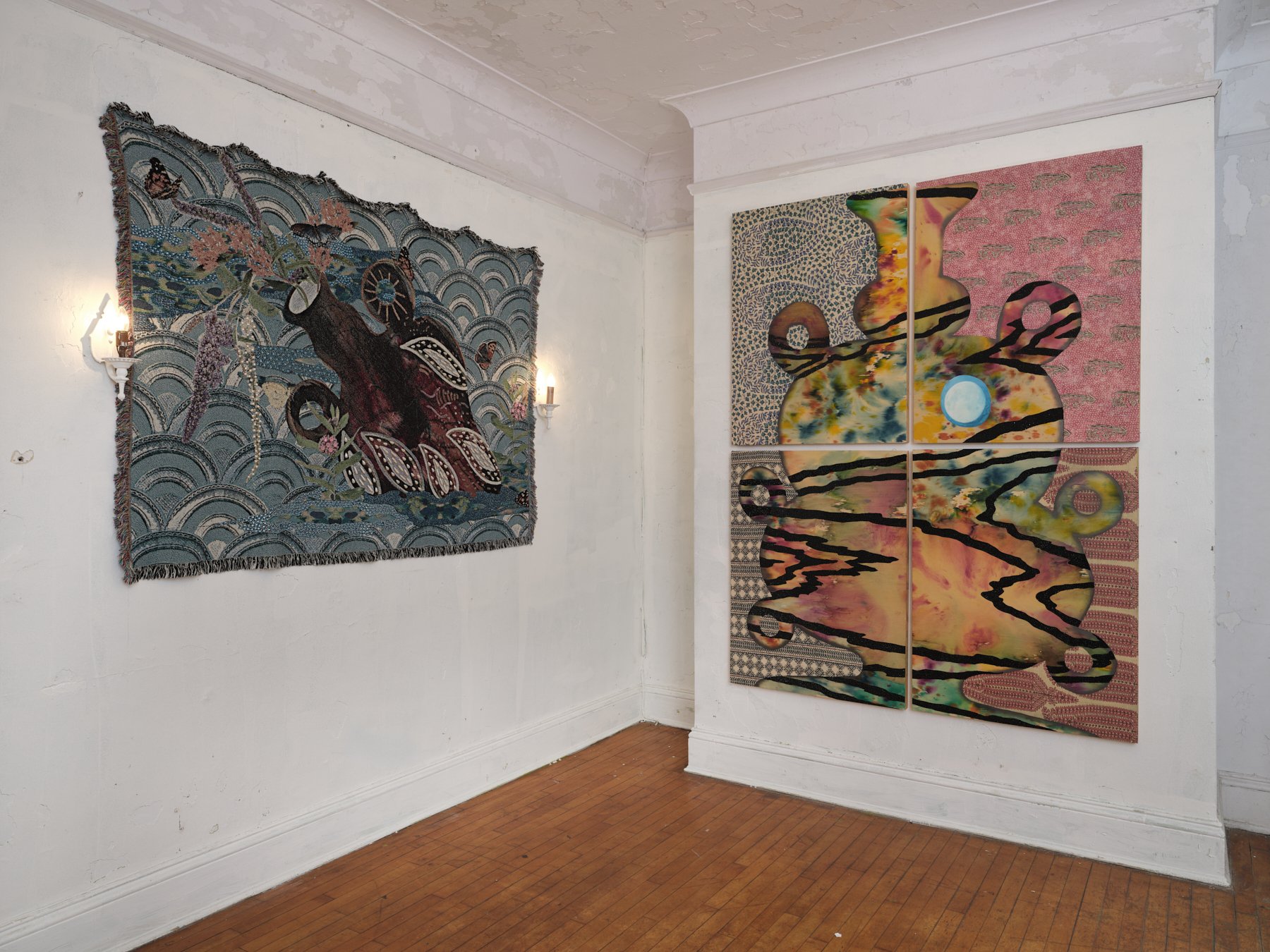
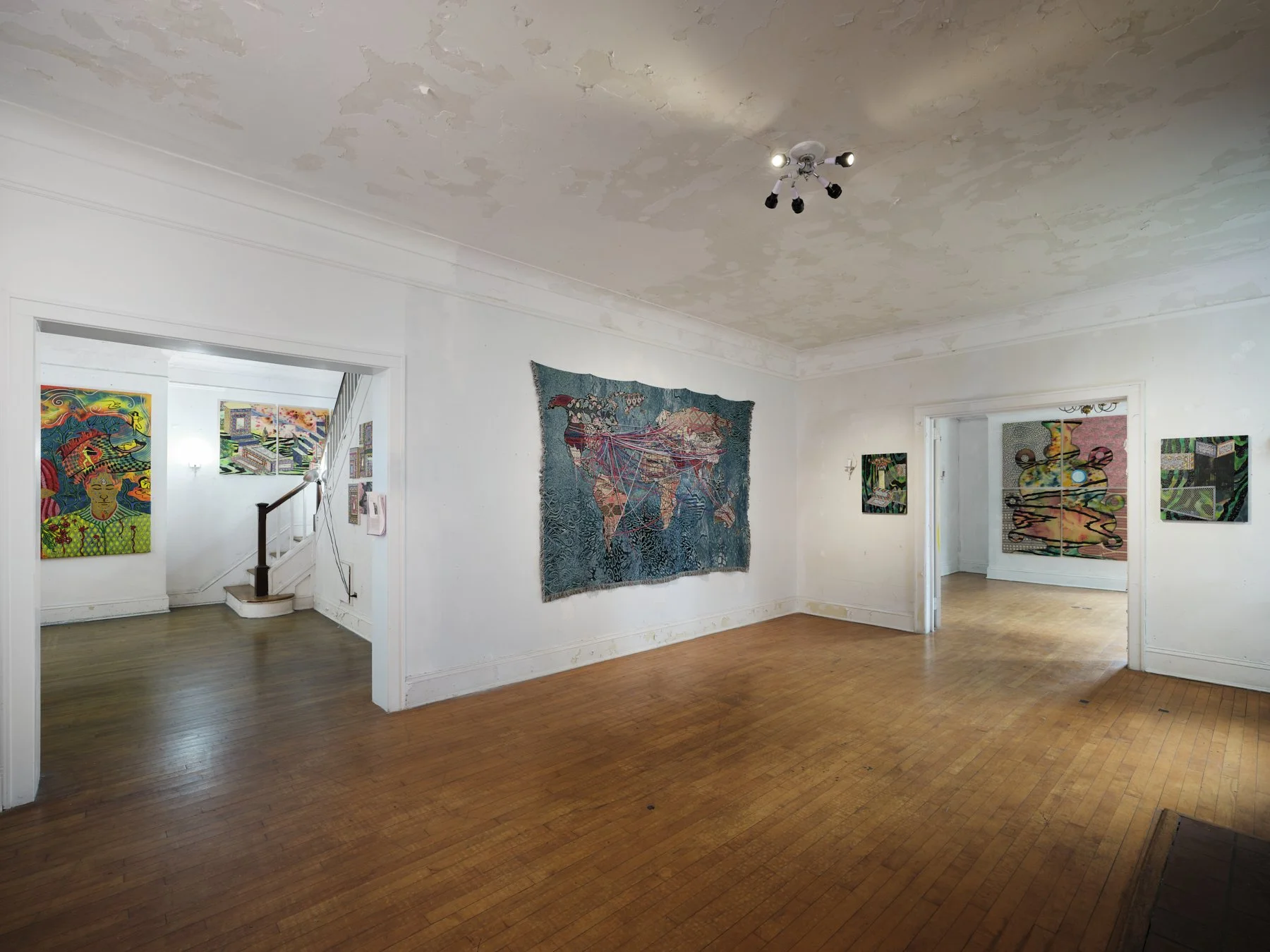
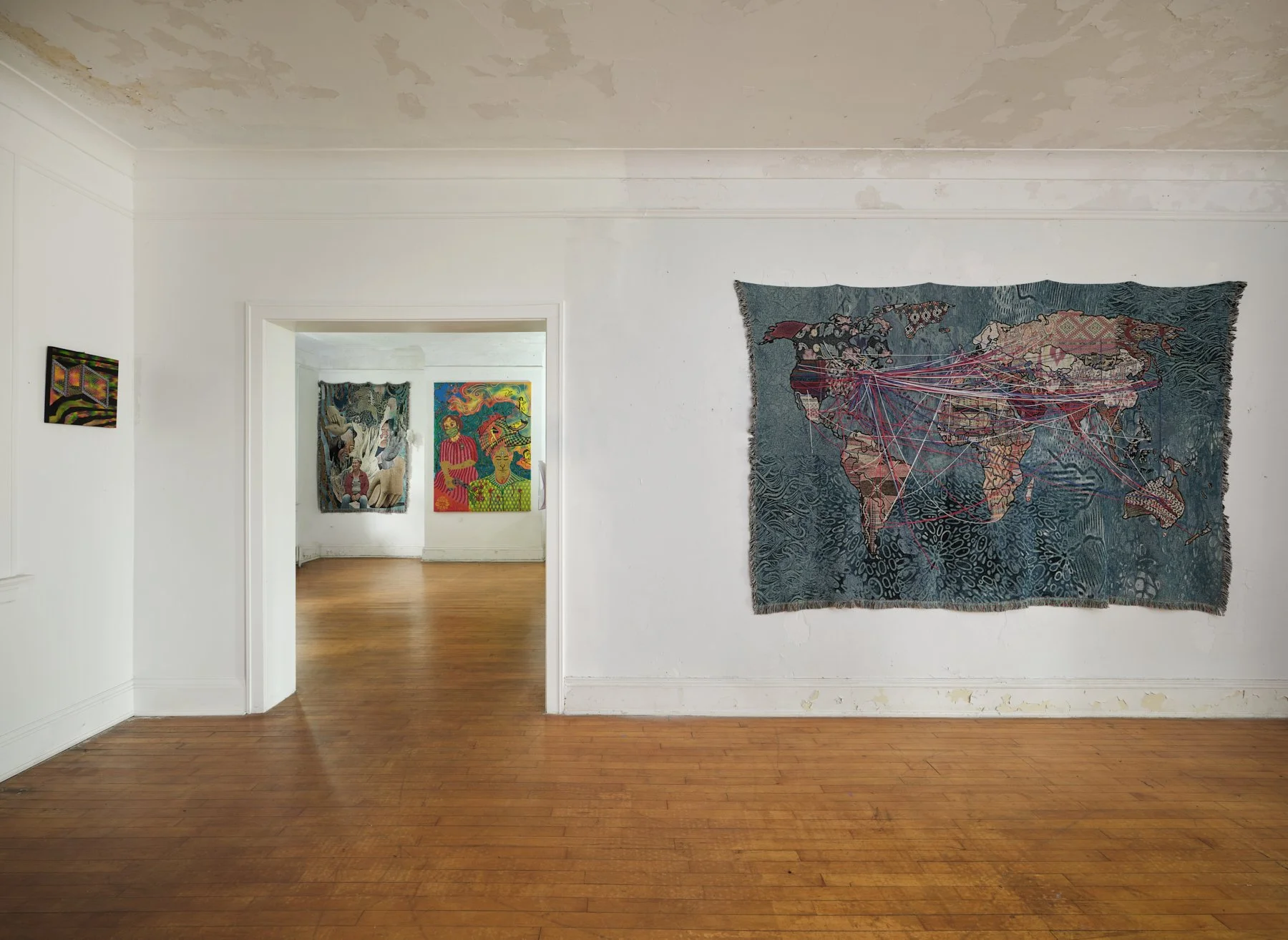
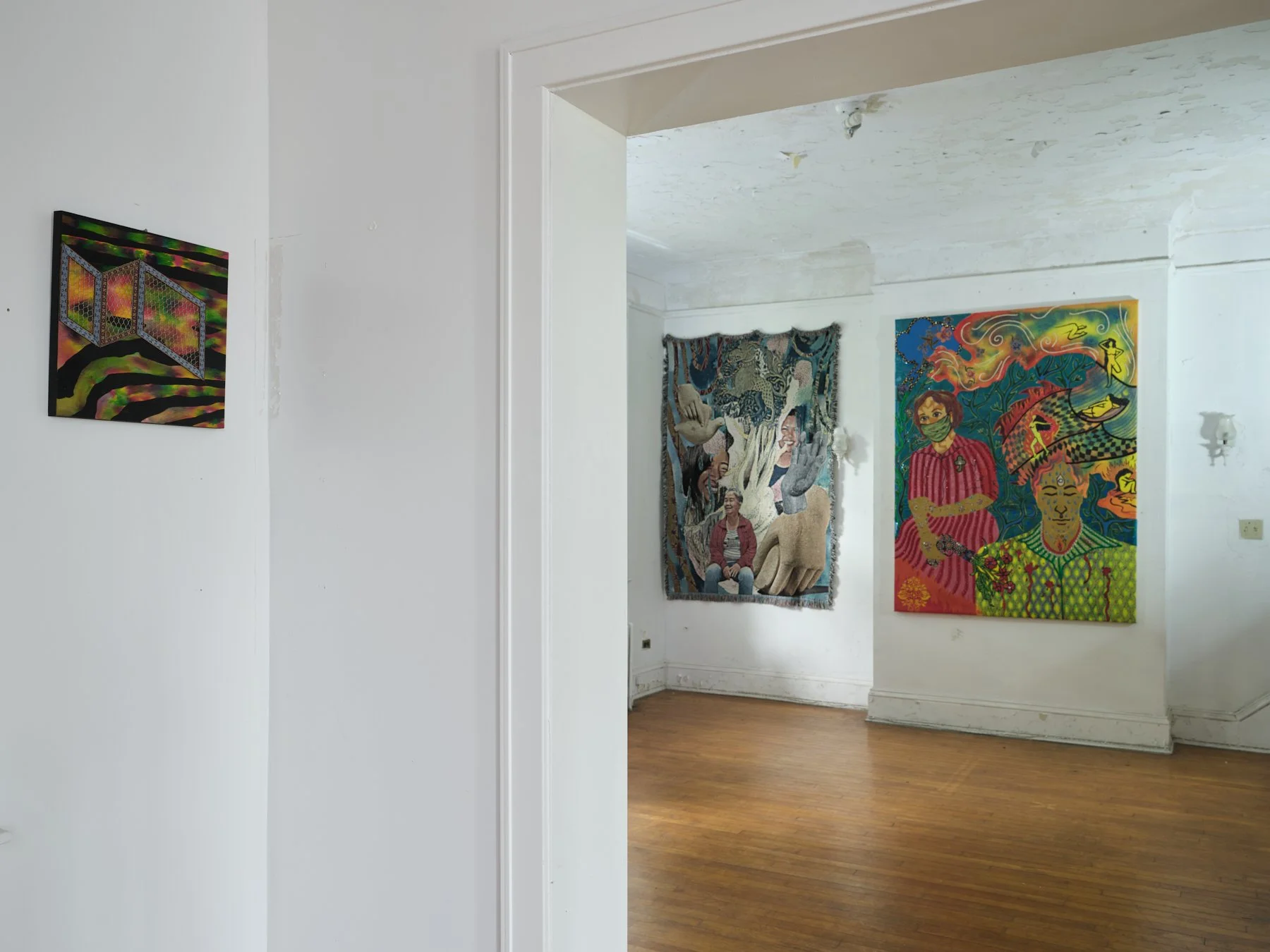
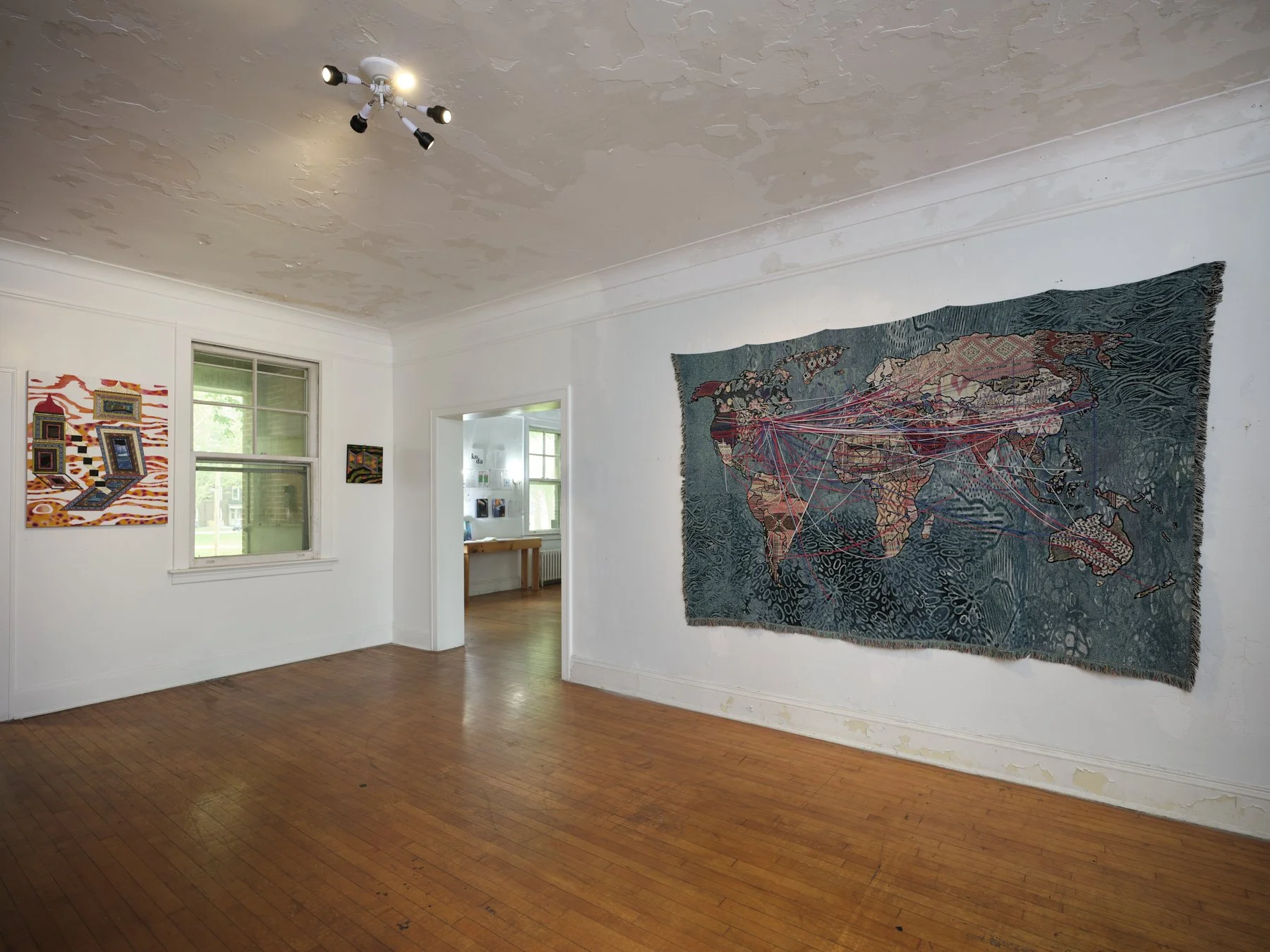
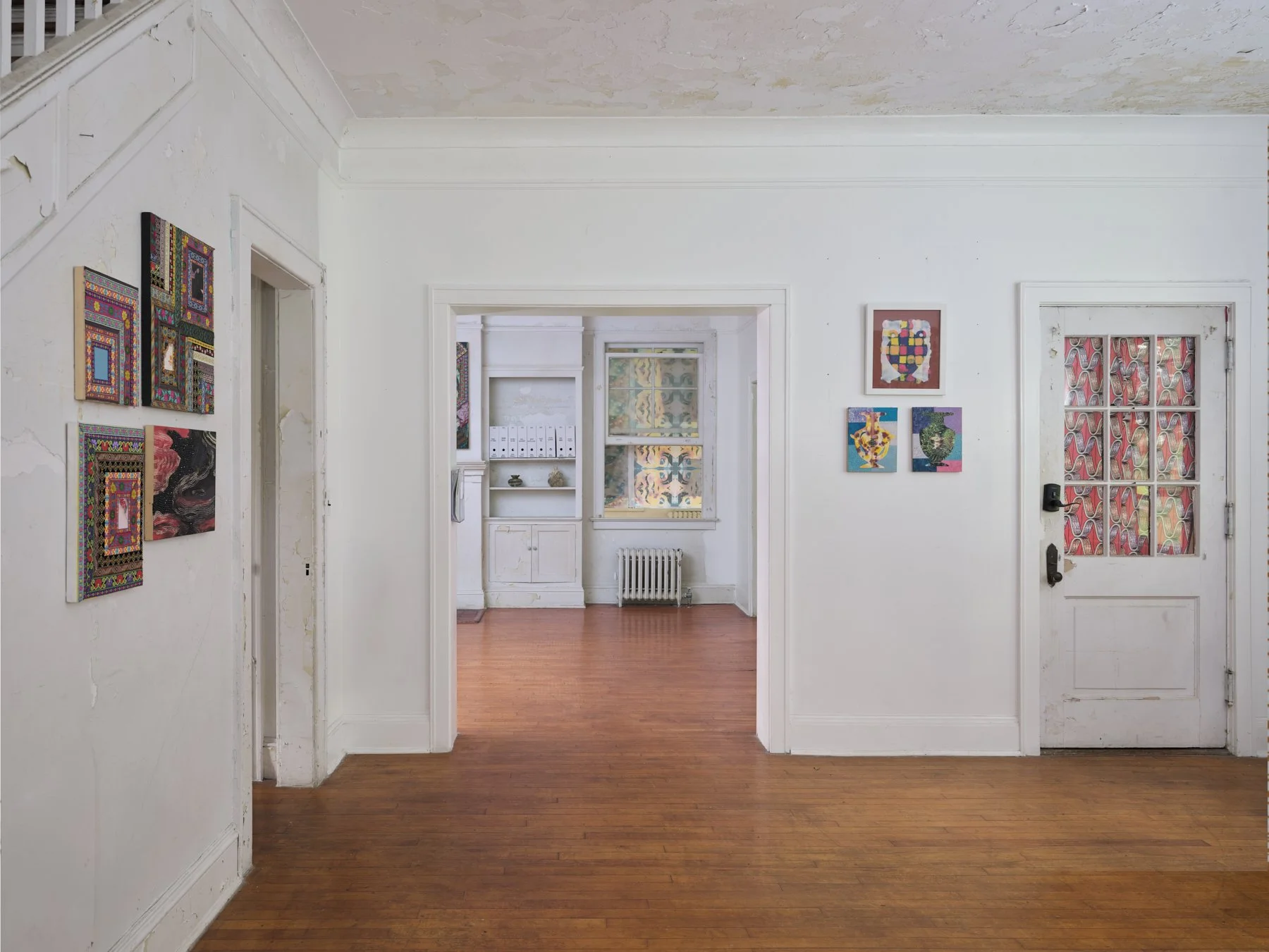
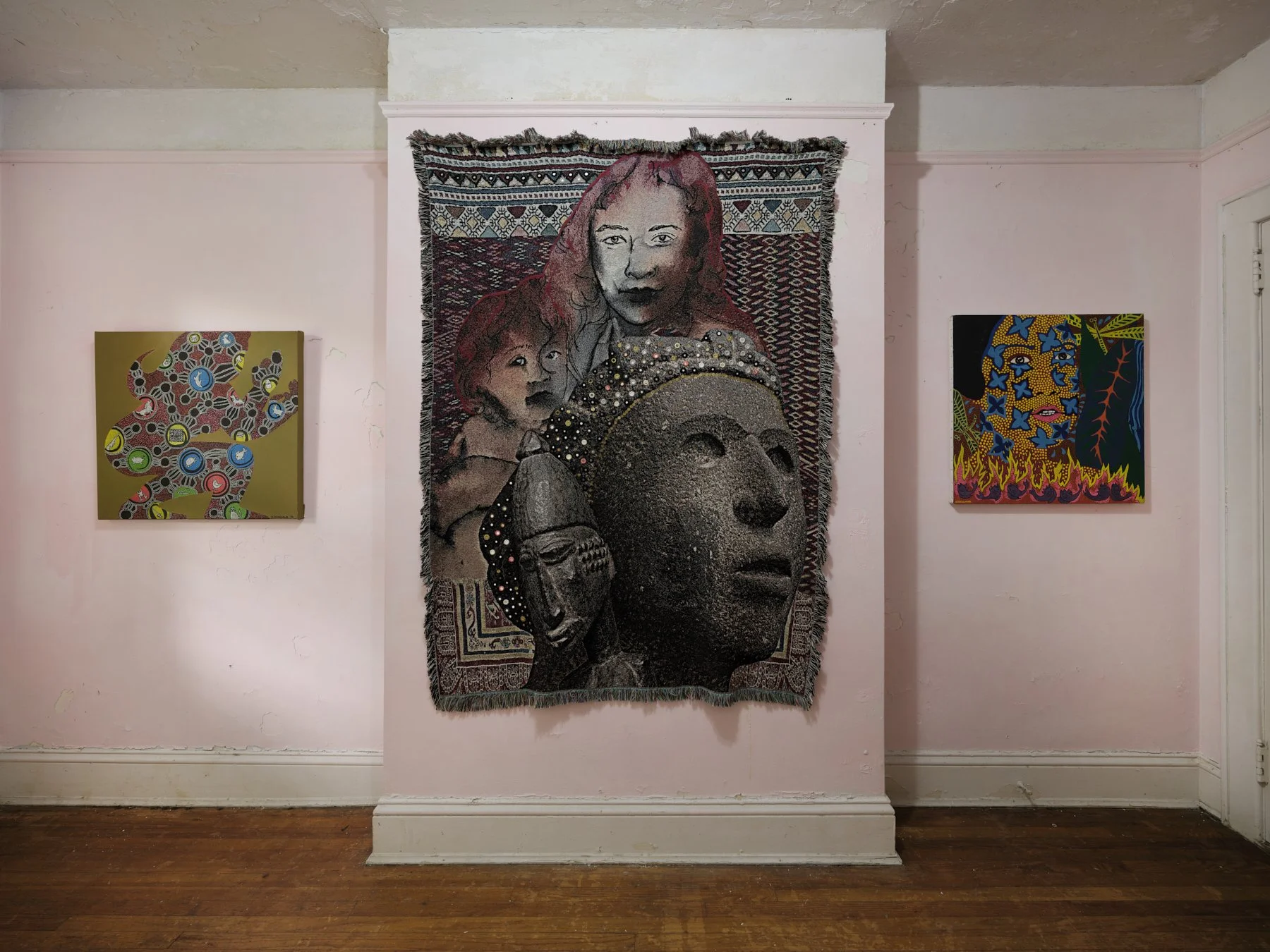
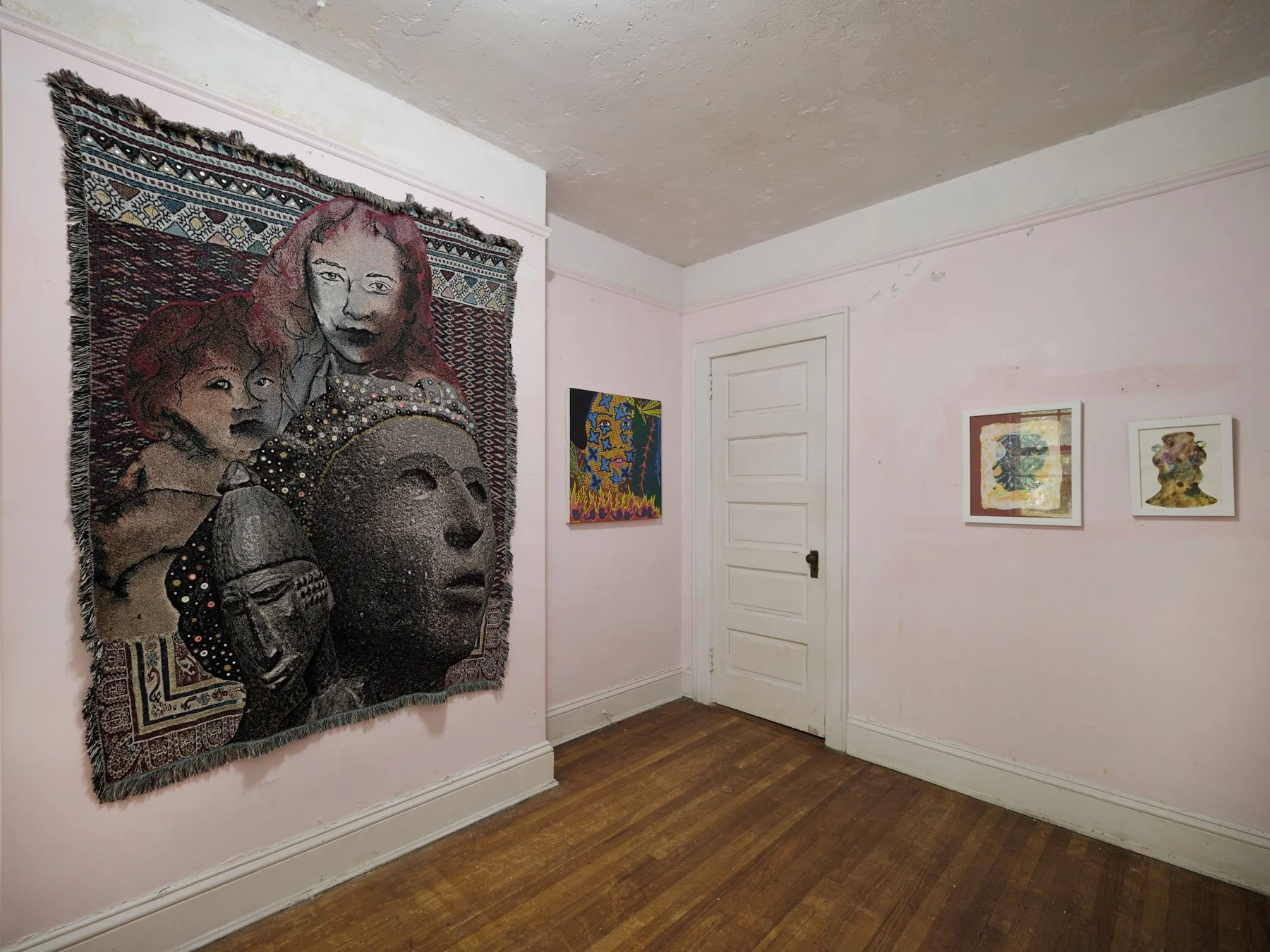
At the beginning of the exhibition, we are greeted by two large works: The Intertwining and Demons and Protectors: Say their names #GuiYingMa #ChristinaYunaLee #MichelleAlyssaGo. While Nakazawa’s practice points to moments of reflection in our day-to-day life, these works remind us of the larger influences that affect us. The Intertwining manifests how the political affects the personal. Made during the war in Afghanistan, Nakazawa addresses how the larger political landscapes intertwine into the daily (even if we imagine ourselves distant from it). Our lives are not immune to the influence of policy, as echoed in Demons and Protectors: Say their names #GuiYingMa #ChristinaYunaLee #MichelleAlyssaGo which speaks directly to the anti-Asian hate fueled during COVID, leading to the murders of the three women included in the tapestry: GuiYing Ma, Christina Yuna Lee, and Michelle Alyssa Go.
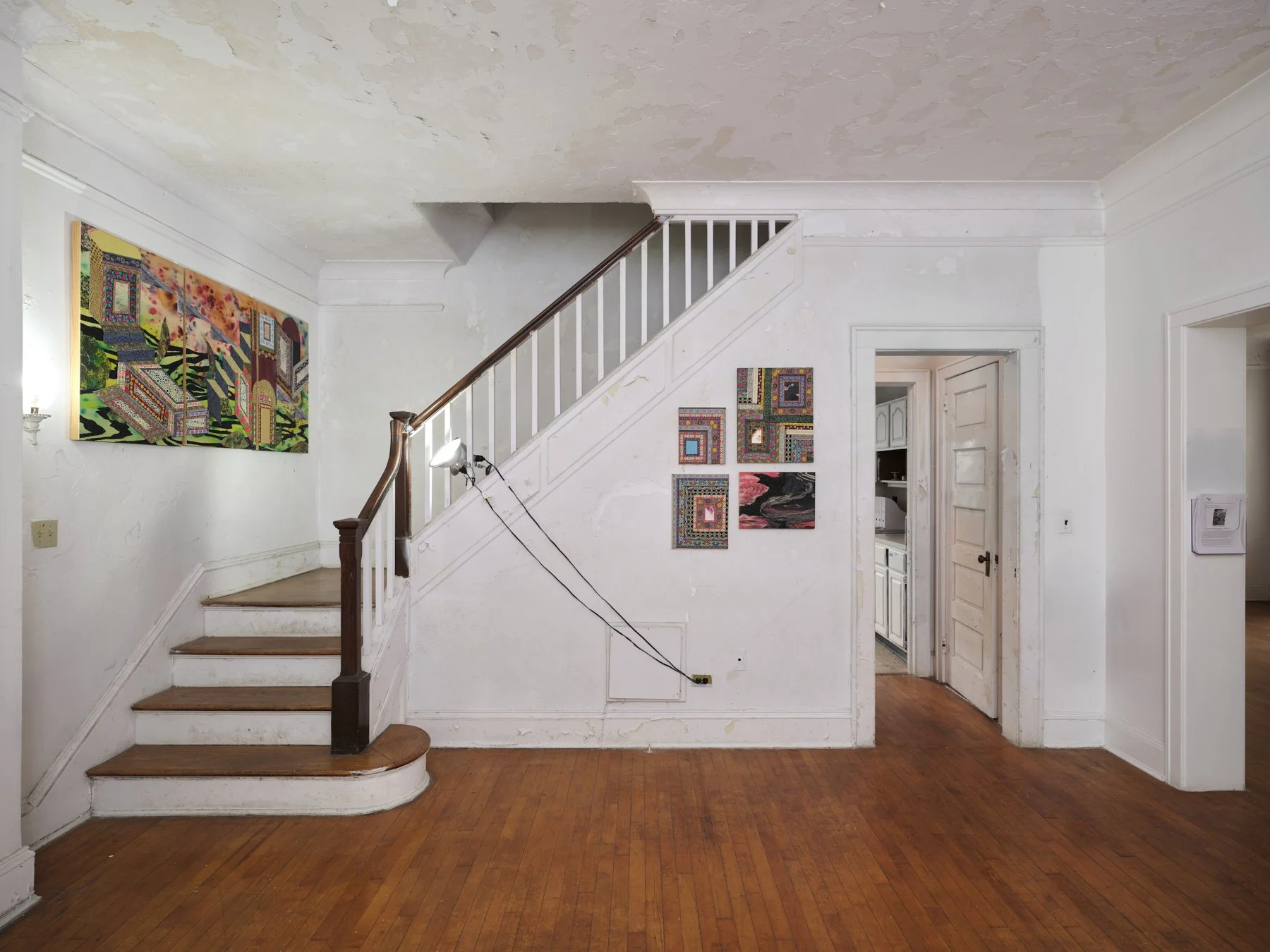
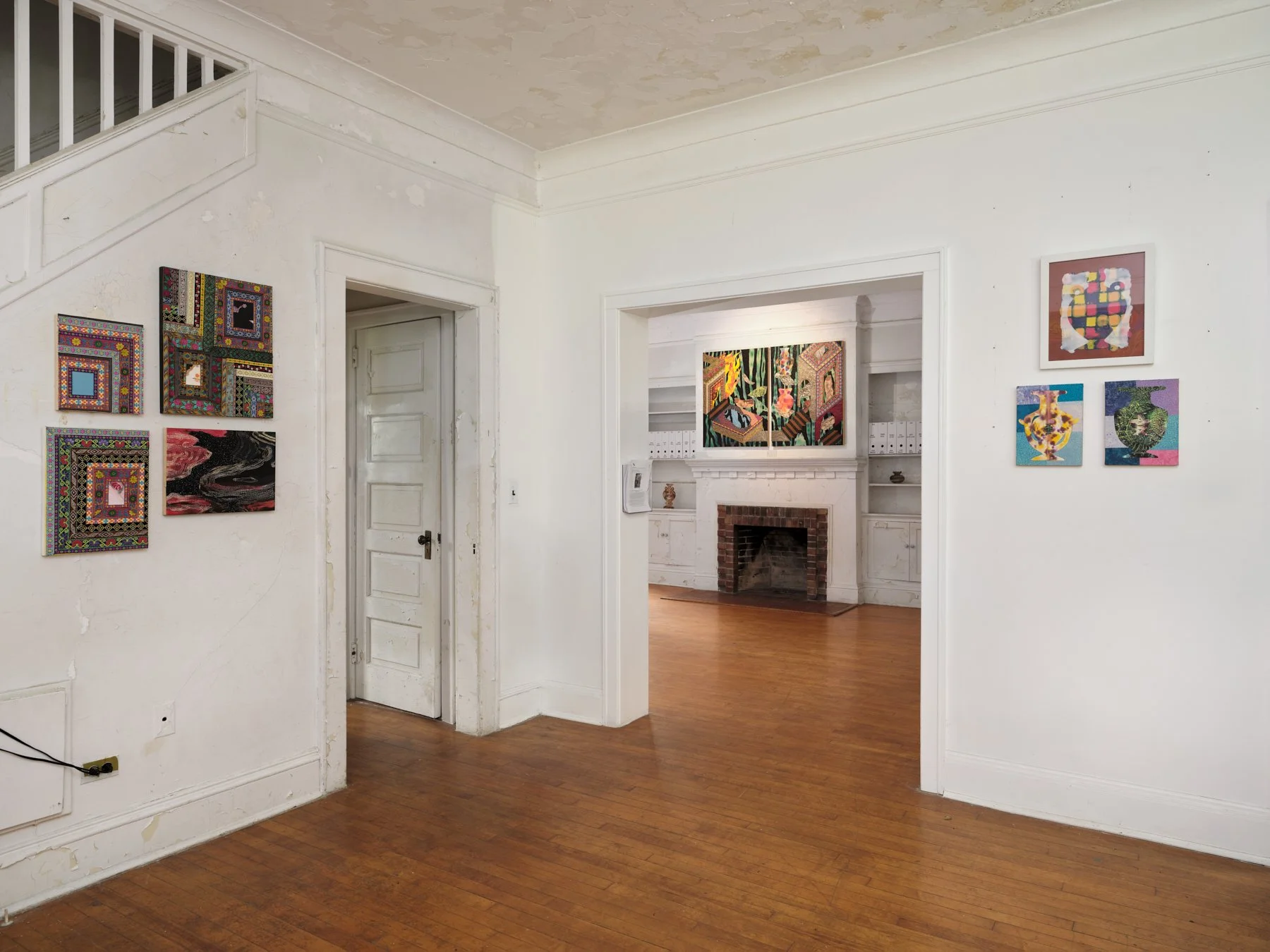
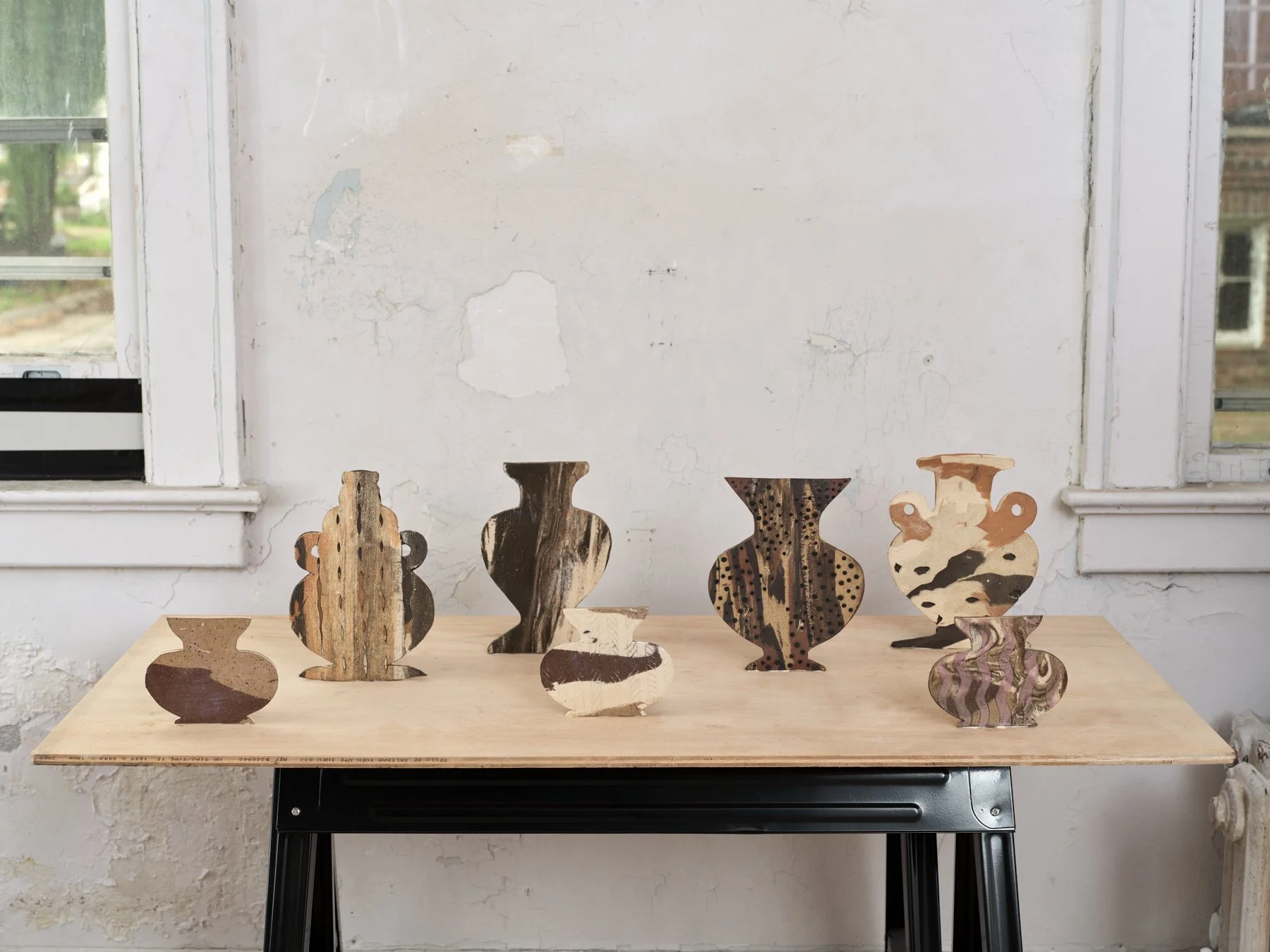
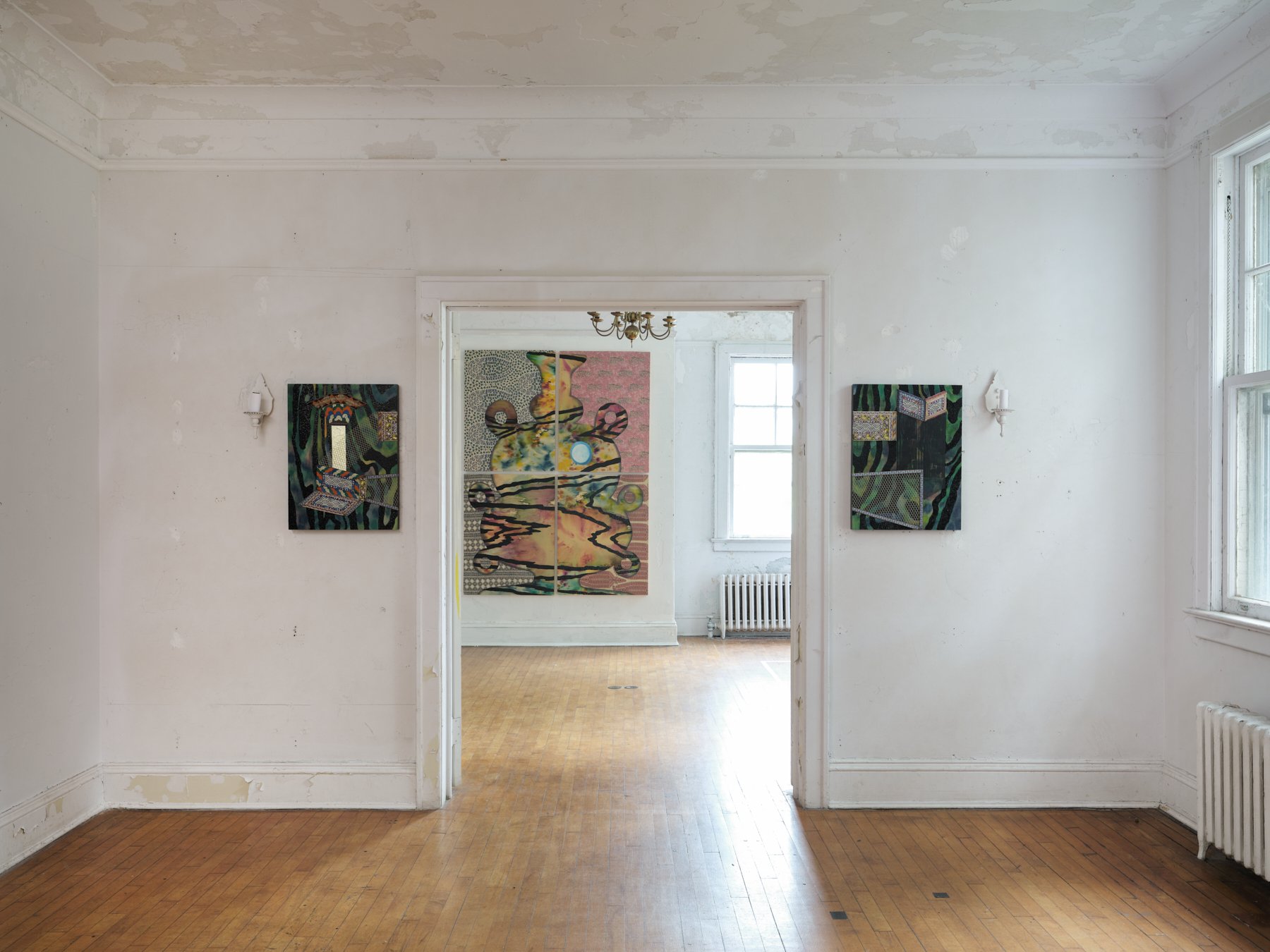
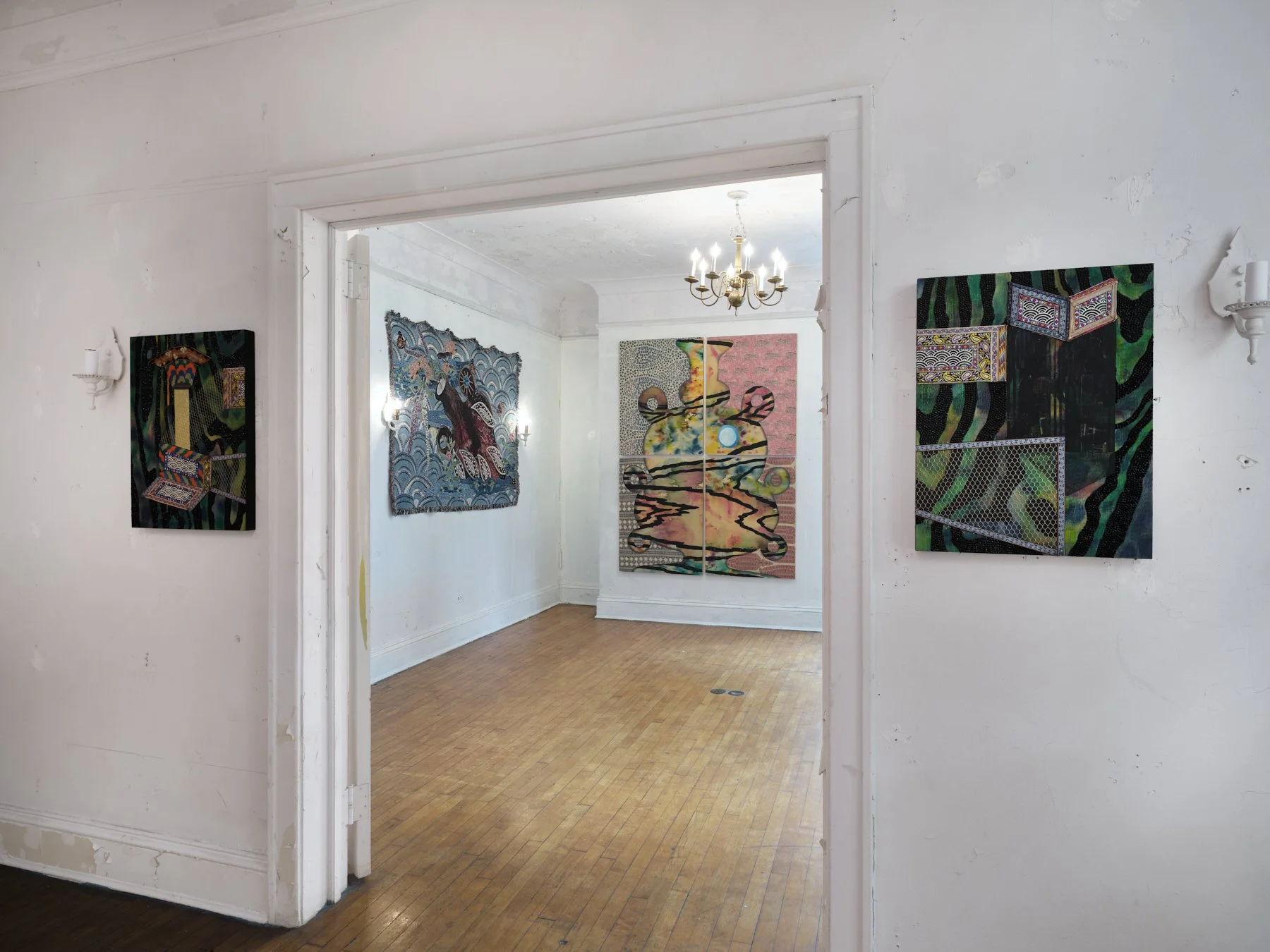
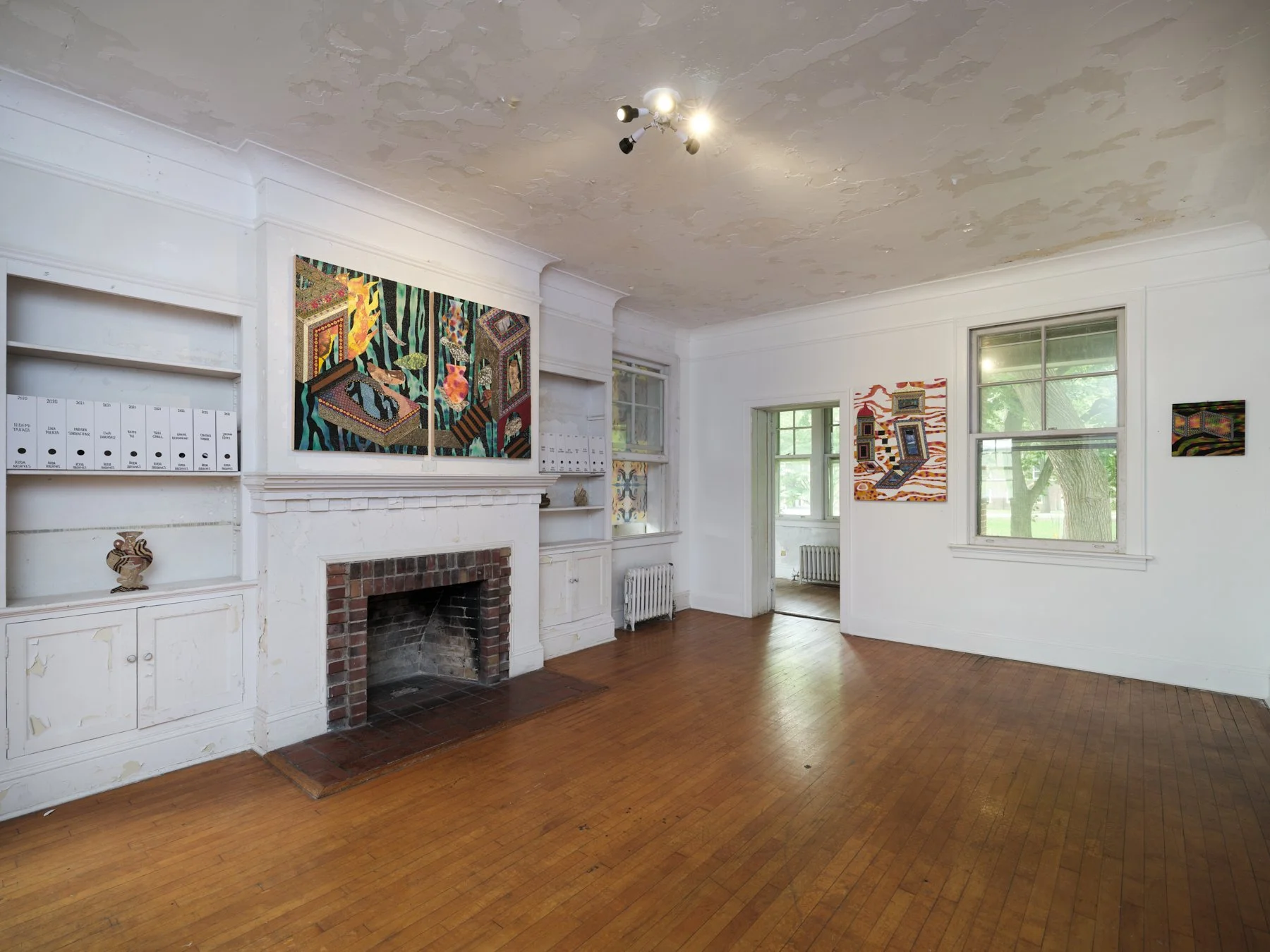
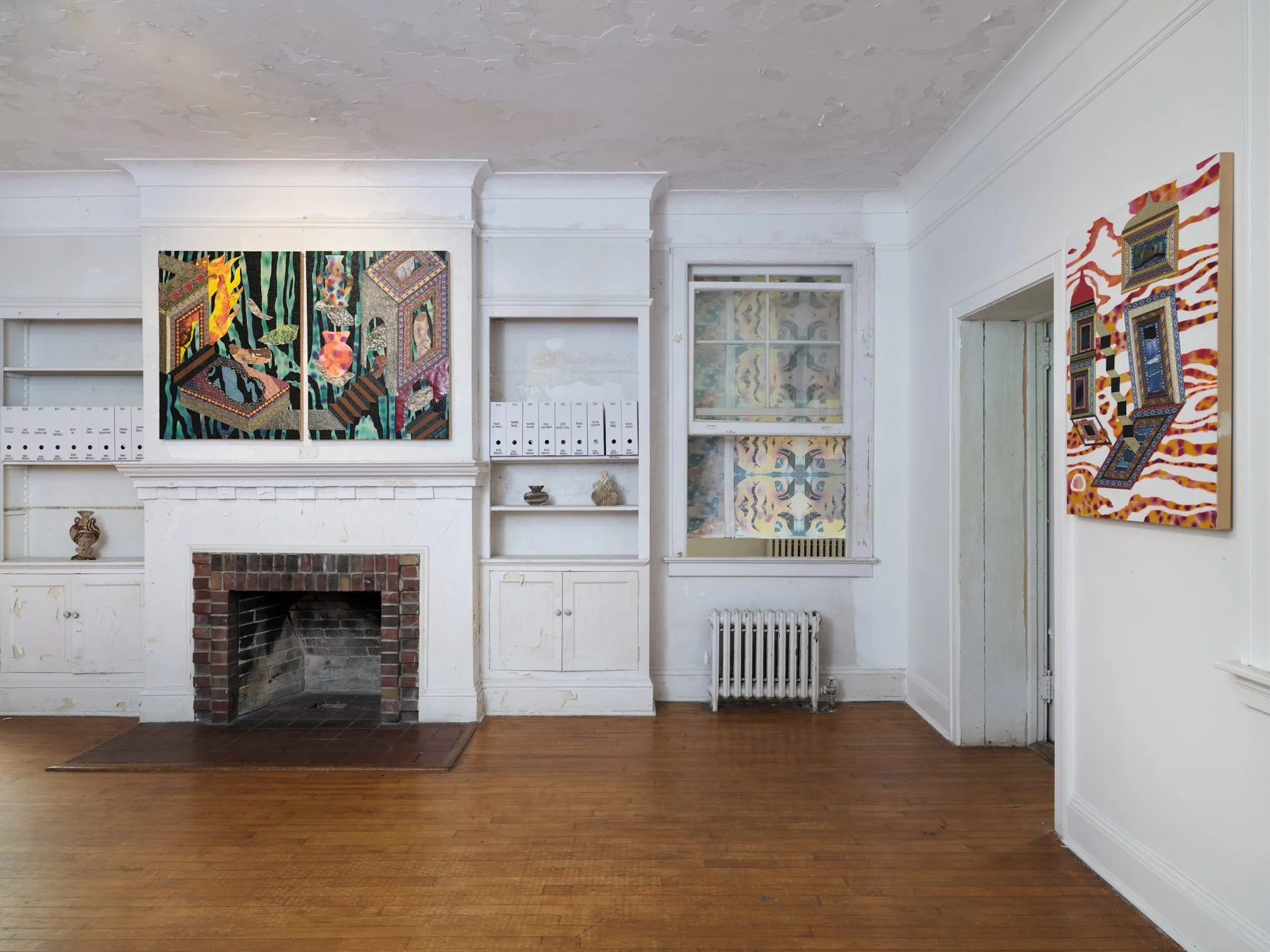
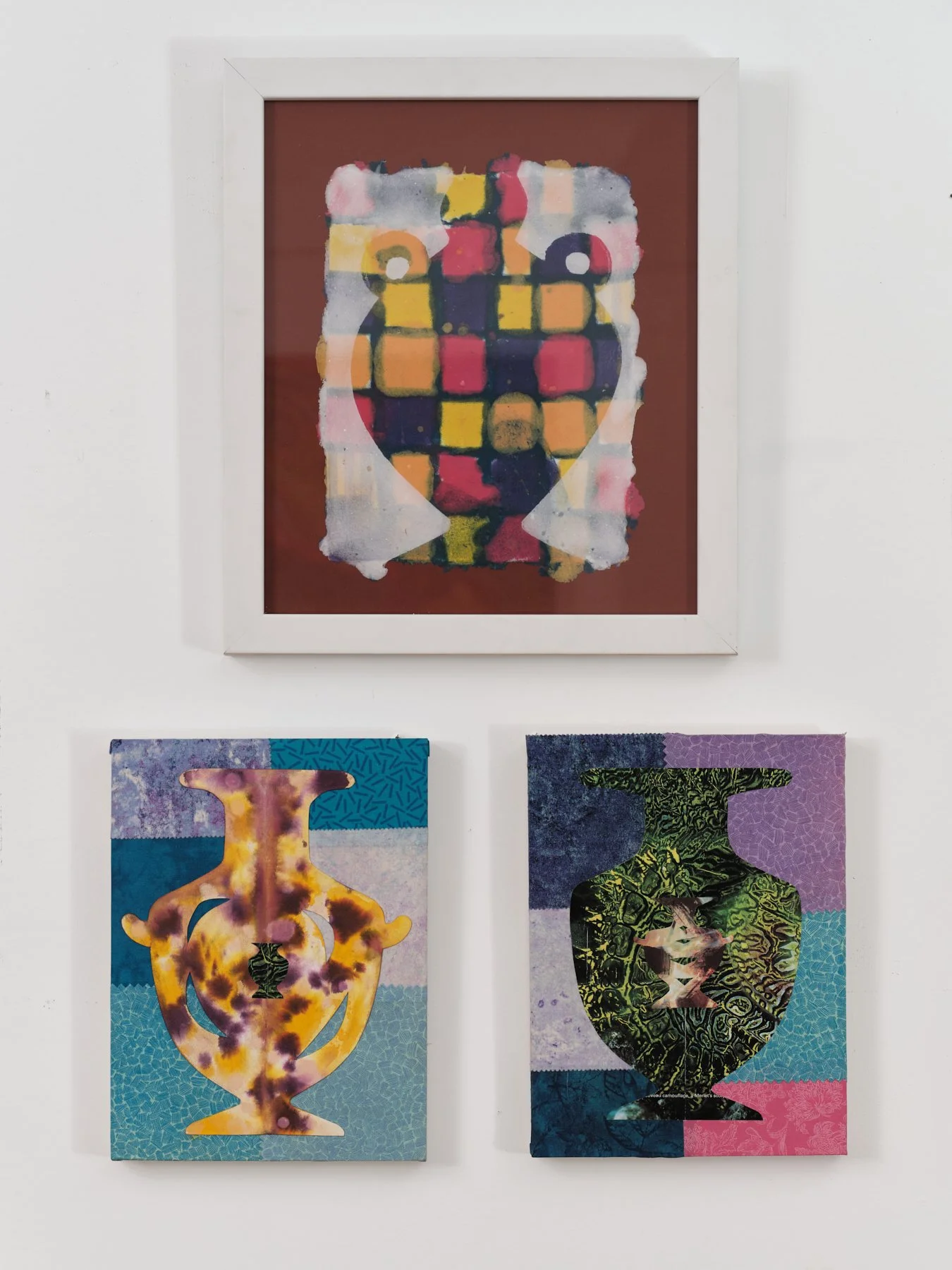
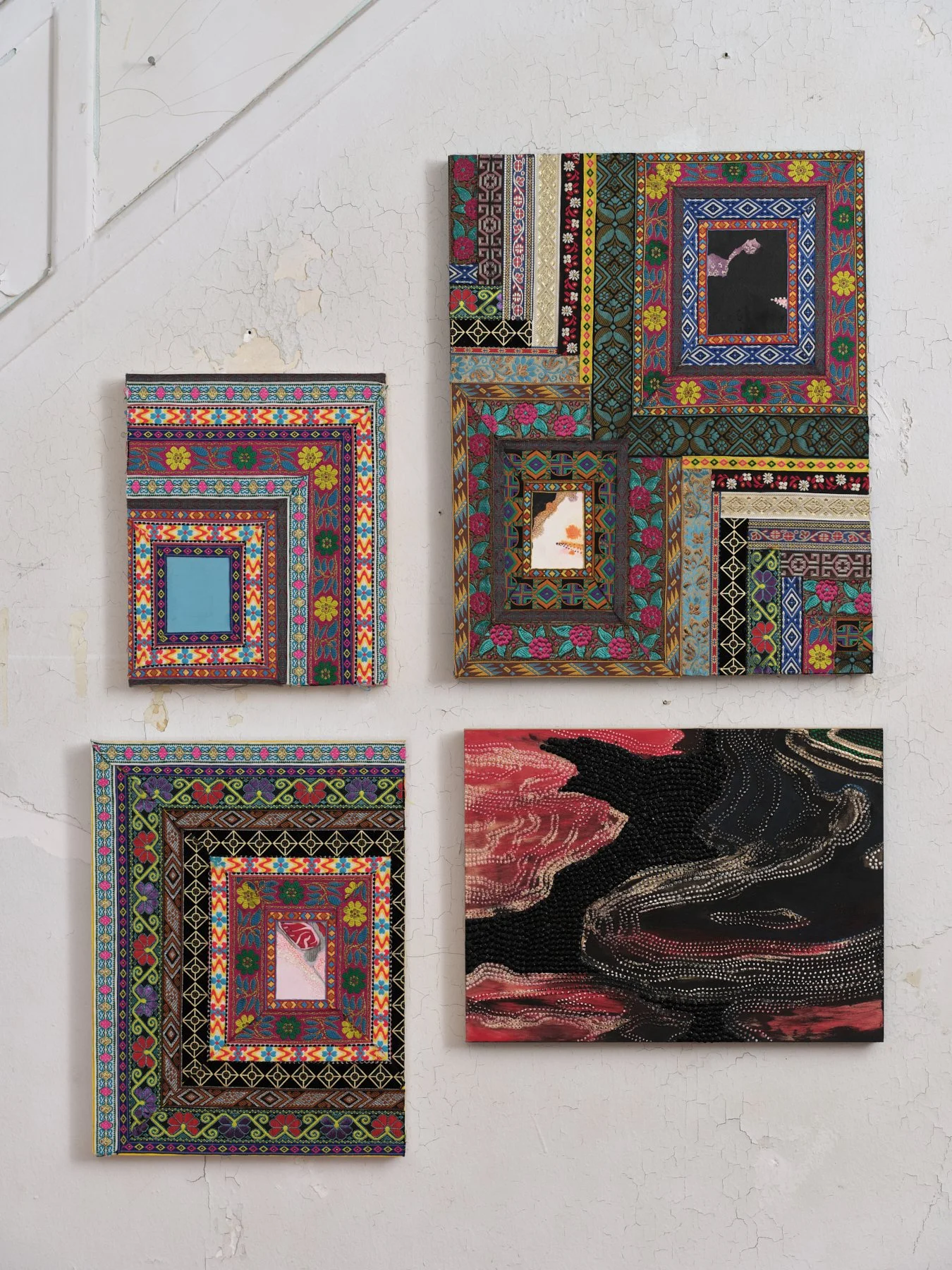
The adjacent smaller works begin to breakdown Nakazawa’s references into material manifestations, serving as a lexicon for the viewer: textiles, vessels, and a desire/failure to contain. Textile Surrogates, I, II, and III, highlight a diasporic kinship with textiles. Playing with expectation, these patterns hint to an ancestral significance in design, but due to cultural tourism and extractionism, they’re actually ready-made mass-produced facsimiles. These works question cultural authenticity, while the other works confront the more nebulous reality of authenticity. The vessels serve as stand ins for the self, showing the urge to contain and carry. Their forms have a tension, signifying ability to carry, but their silhouettes convey an ephemerality that imply that they may not hold all that is needed.
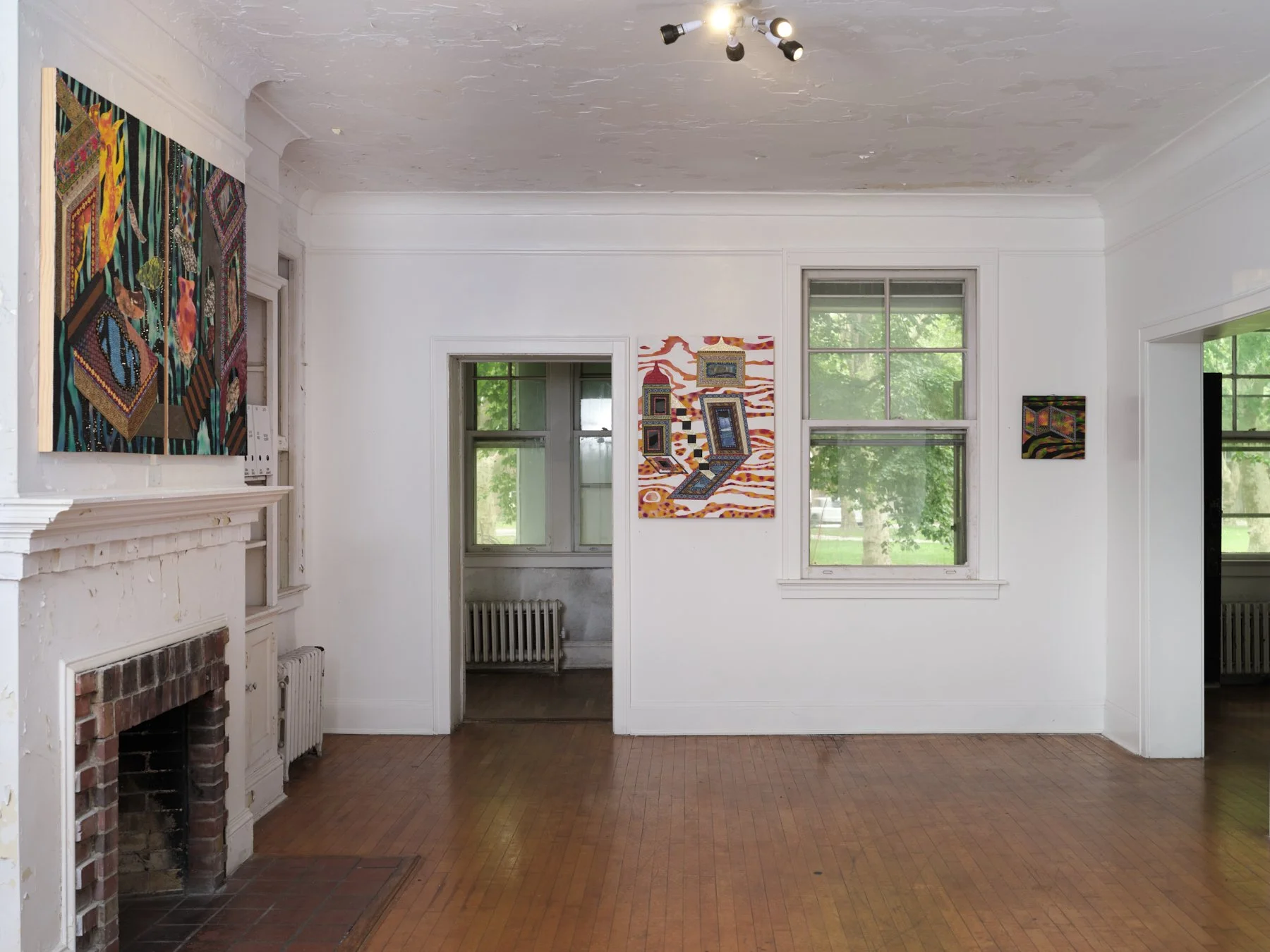
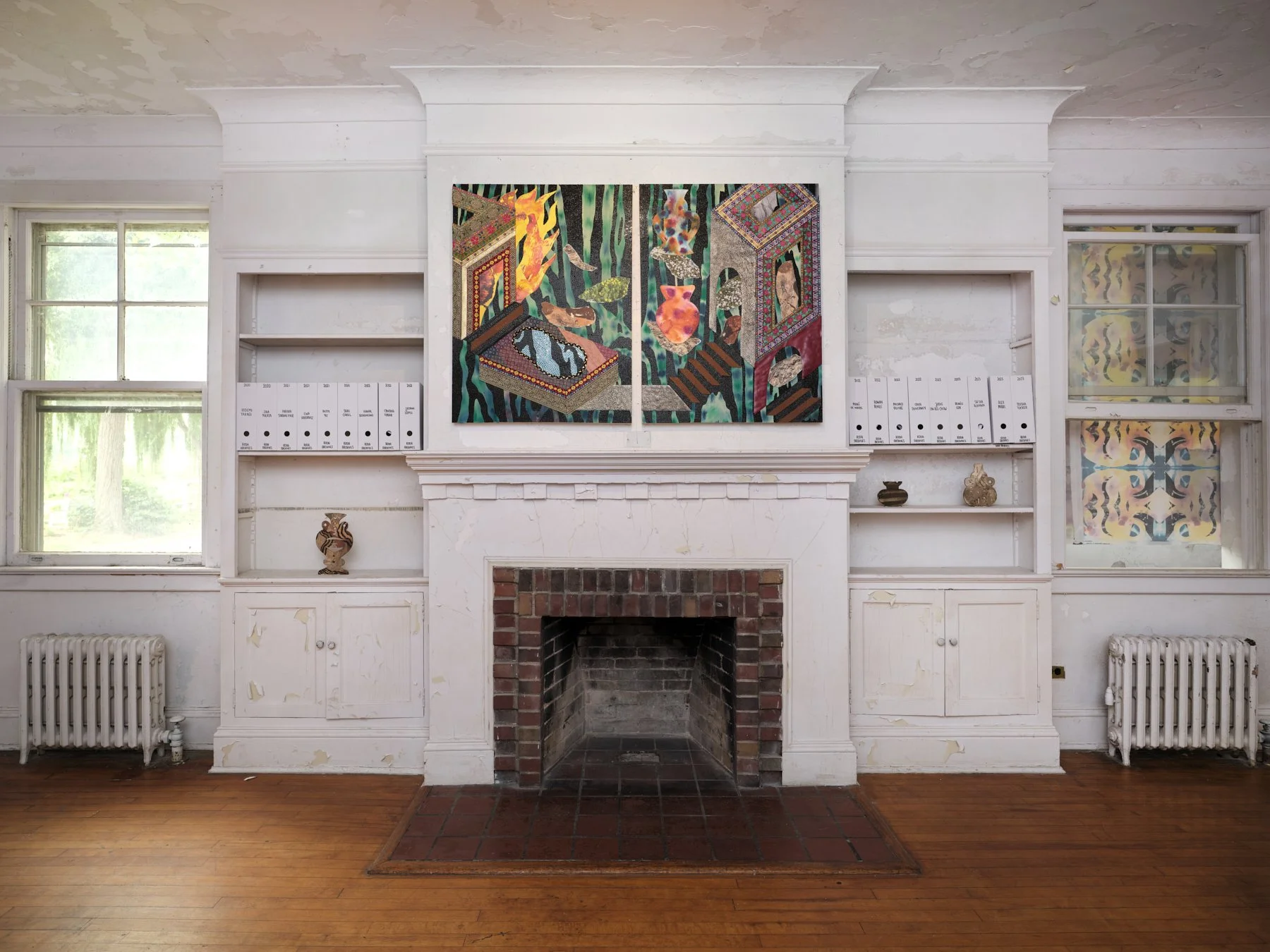
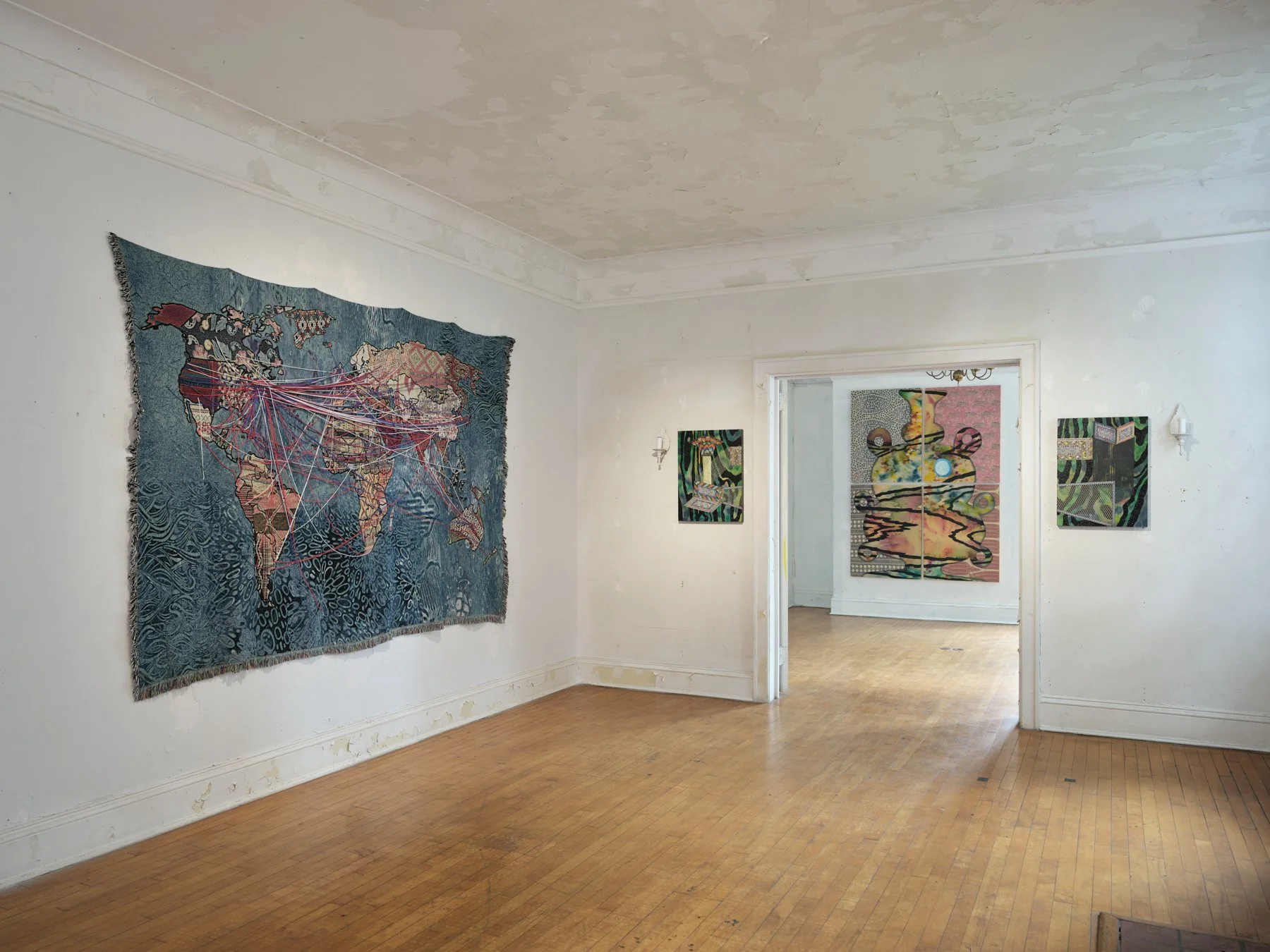
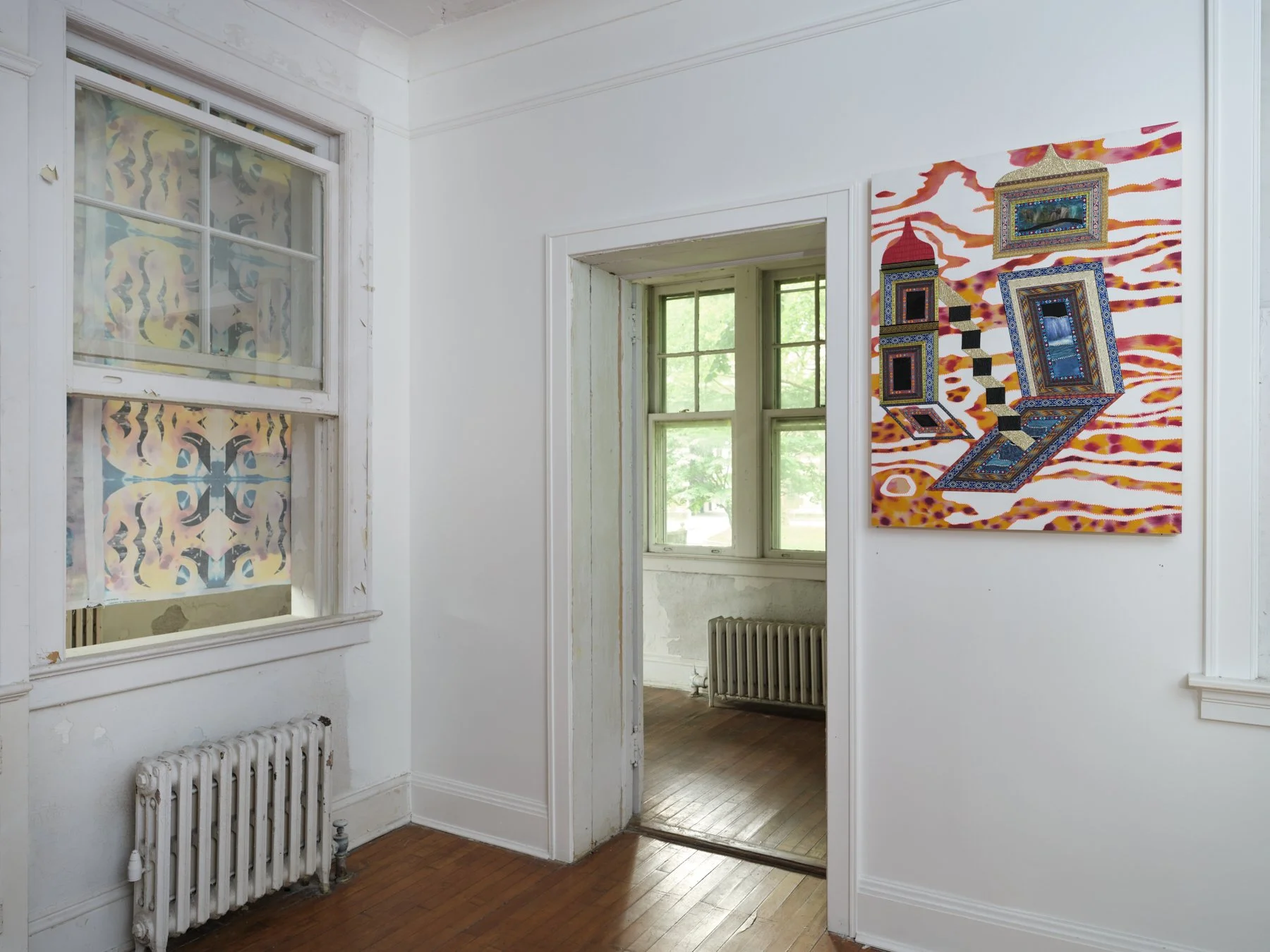
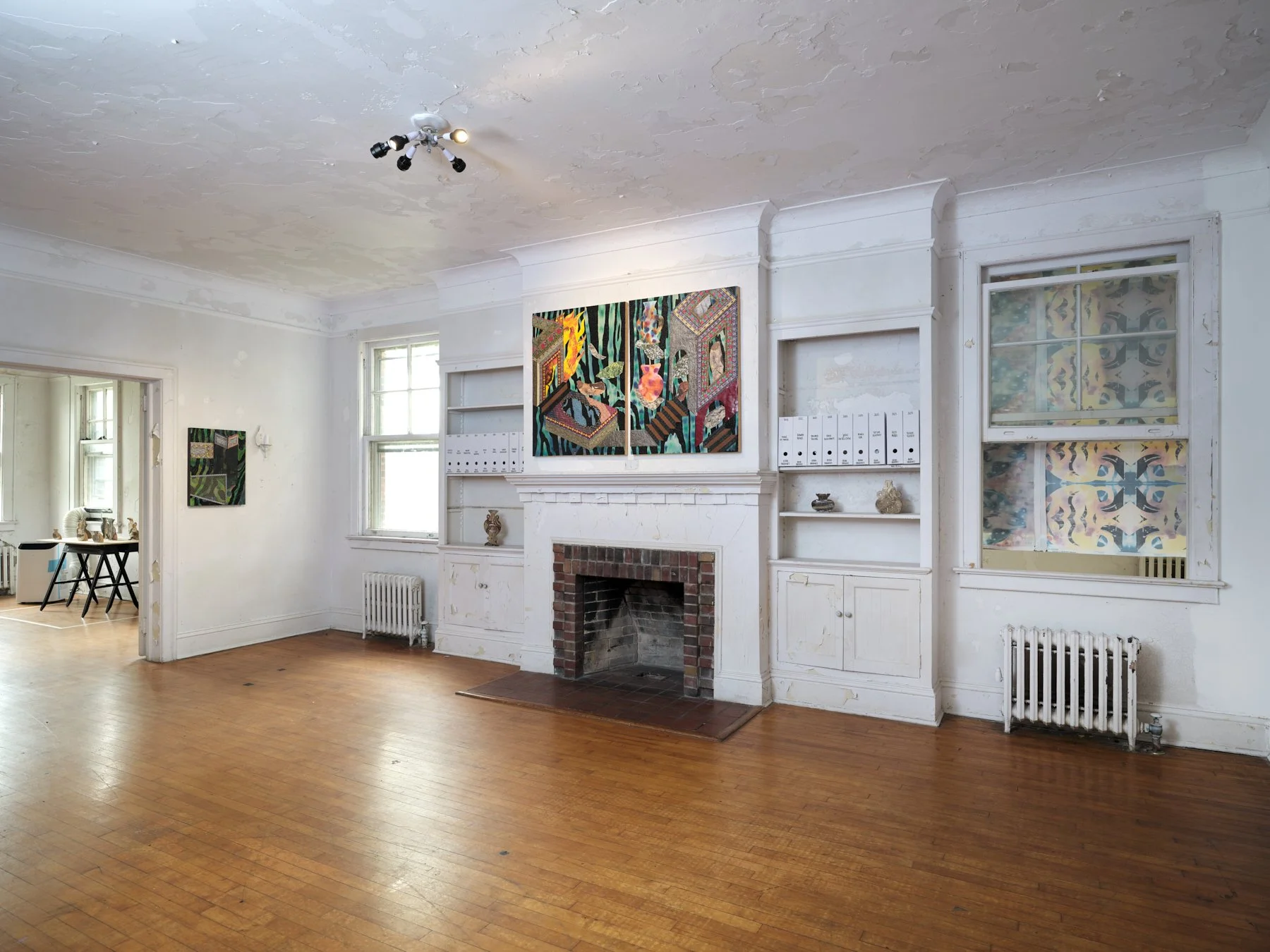
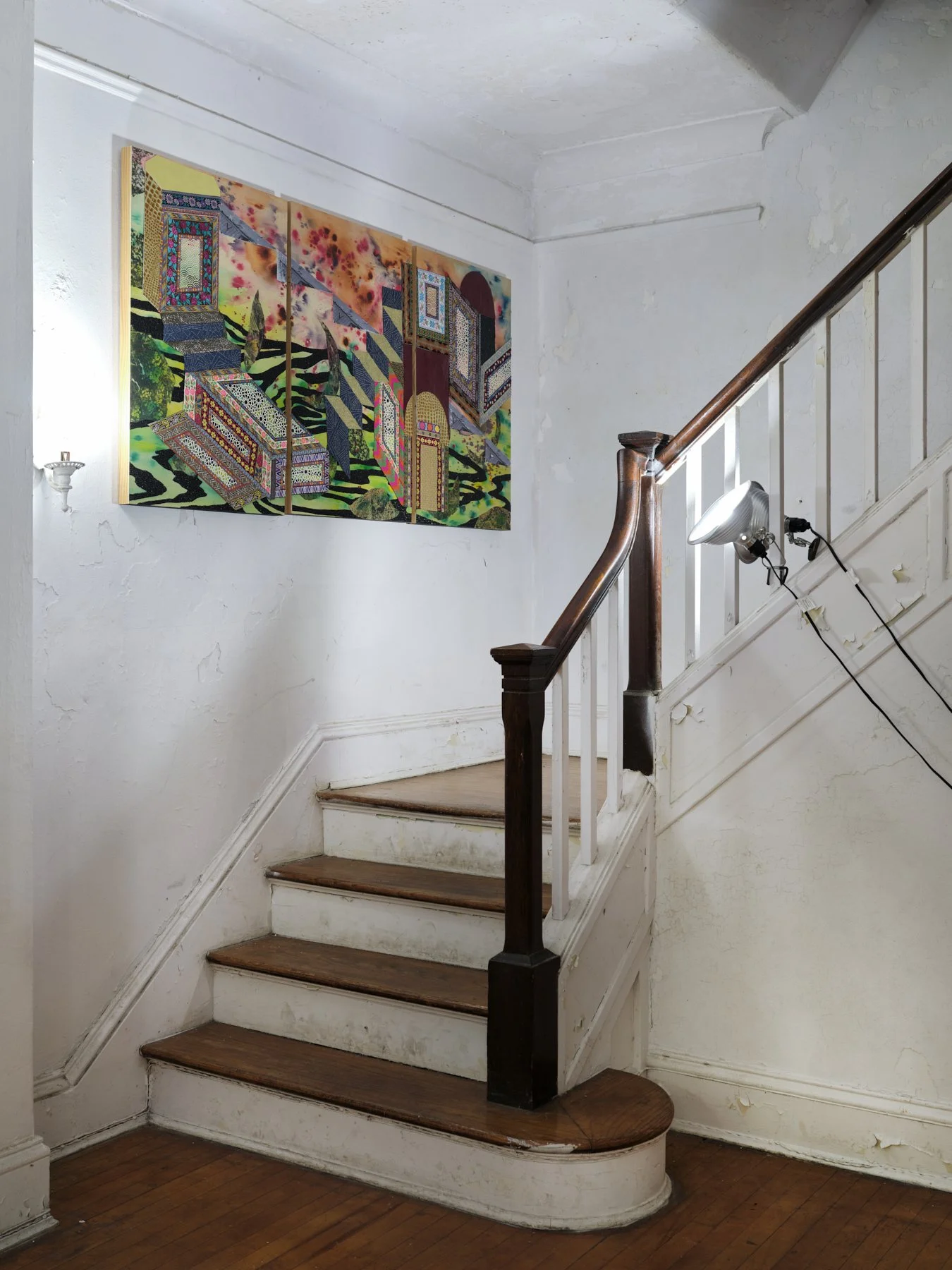
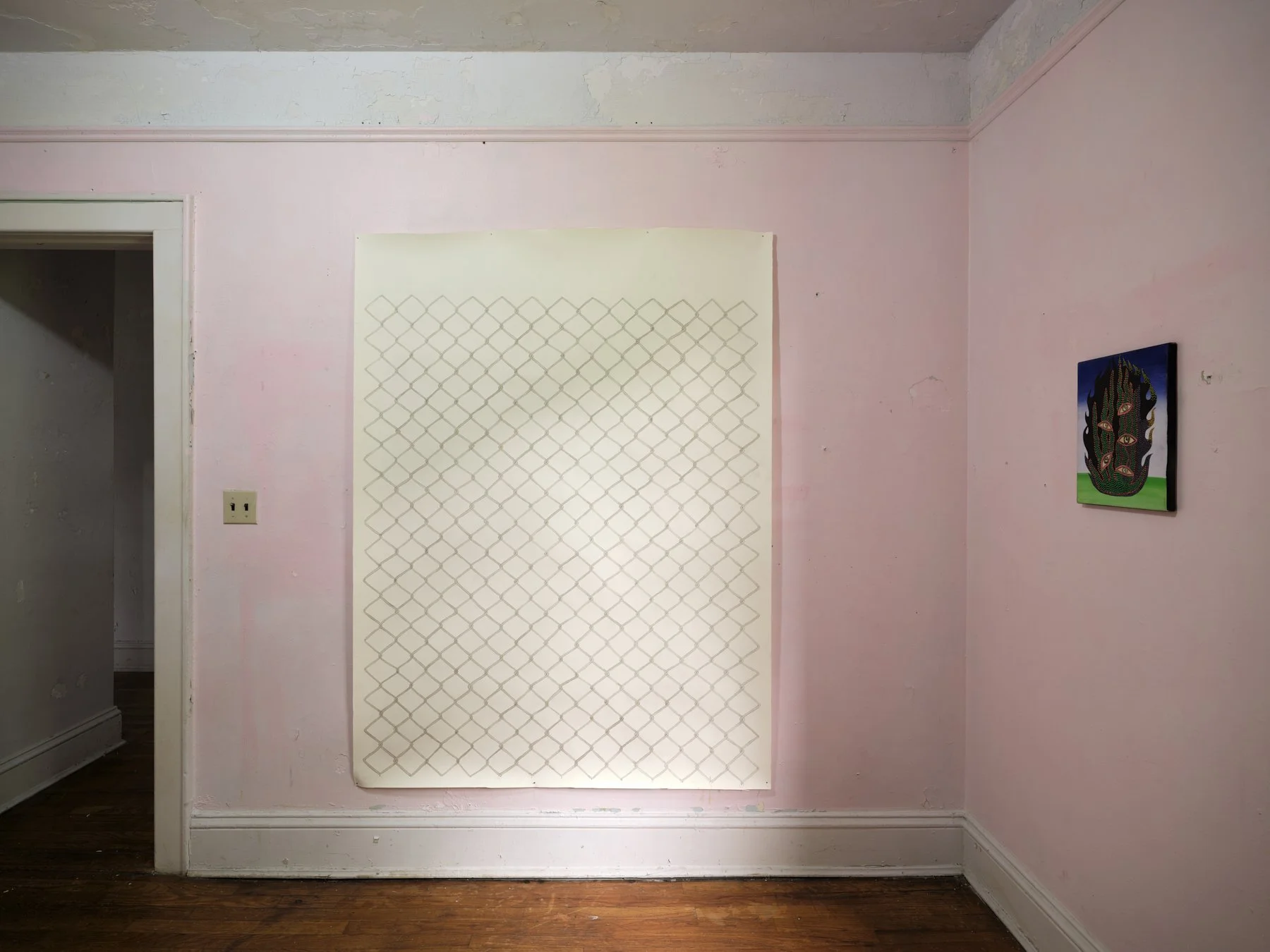
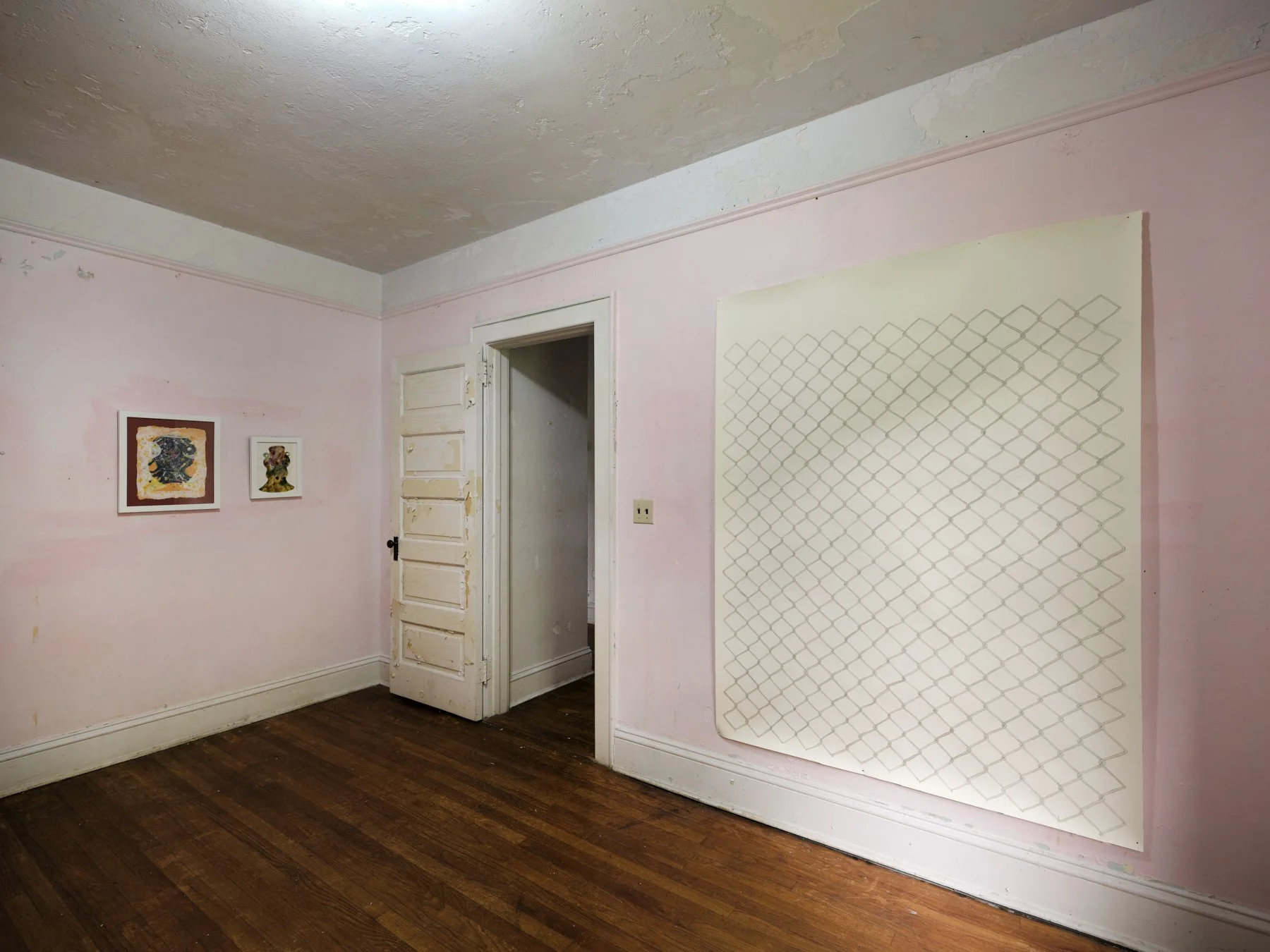
Moving from concrete forms, the exhibition transitions into systems-based image making such as maps and orthographic structures. Works from Visual Heteroglossia implement a new form of storytelling that feels influential for the works moving forward. This series references the concept of heteroglossia developed by Mikhail Bakhtin, which describes the presence of and conflict between different types of perspectives as the driving force behind a powerful story. Nakazawa implements this same concept into image-making, developing works that can hold multiple viewpoints, which is further emphasized through its material variety. These structures unfold into seemingly disparate maps that all unify into one form. Nakazawa builds on this layered unfolding through Our Stories of Migration, by inviting the audience into the process alongside the artist. Participants embroidered their own ancestral, present, and future paths onto the surface of the tapestry, creating a communal conversation on migration and what it means to be a global citizen. On the shelves are ceramic iterations of the vessel forms. Similar to their paper counterparts, they imply the ability to carry, but in form they are not functional. Do they fail as vessels? Or serve as an emblem of reflection on the vessel itself?
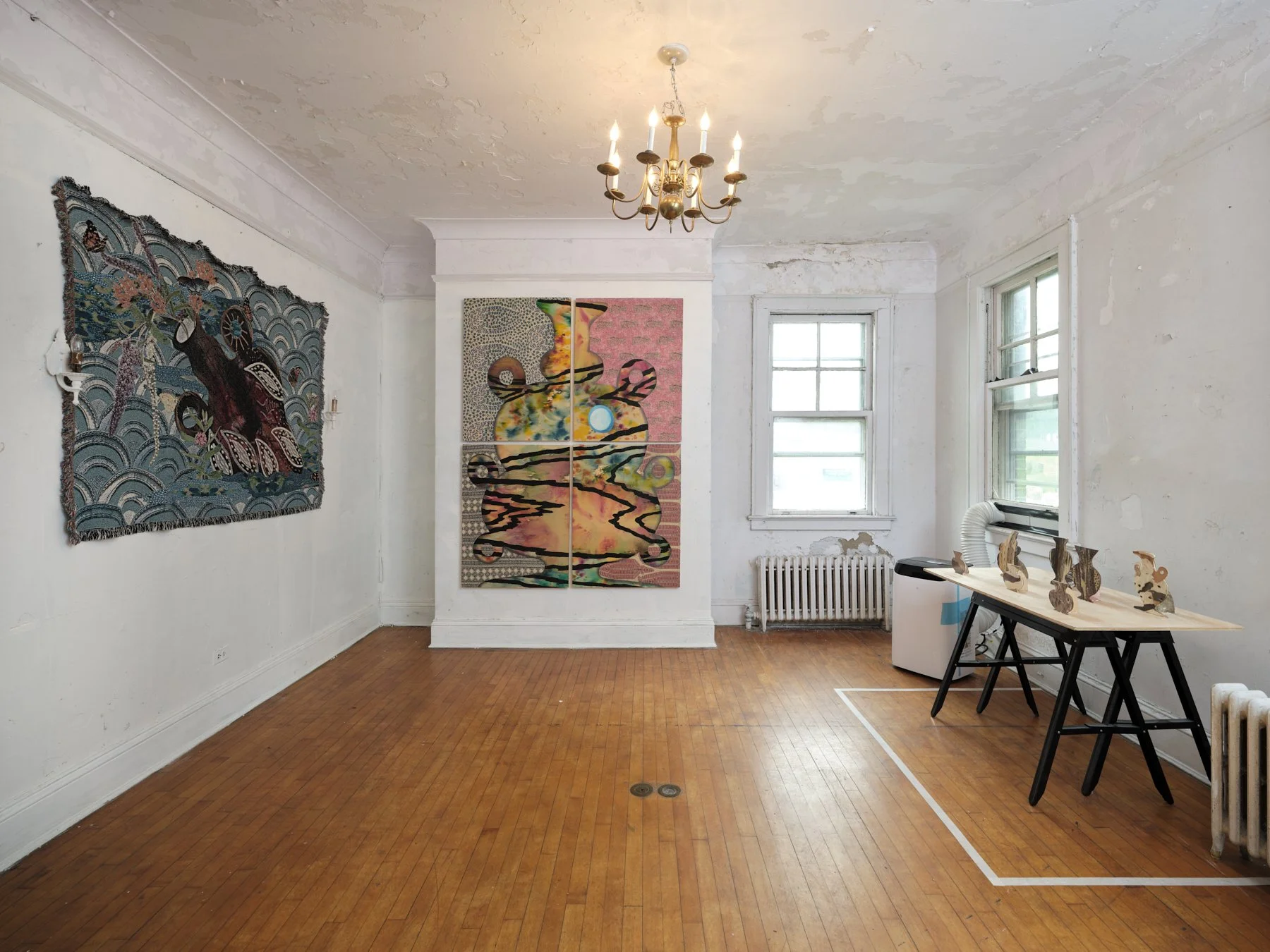
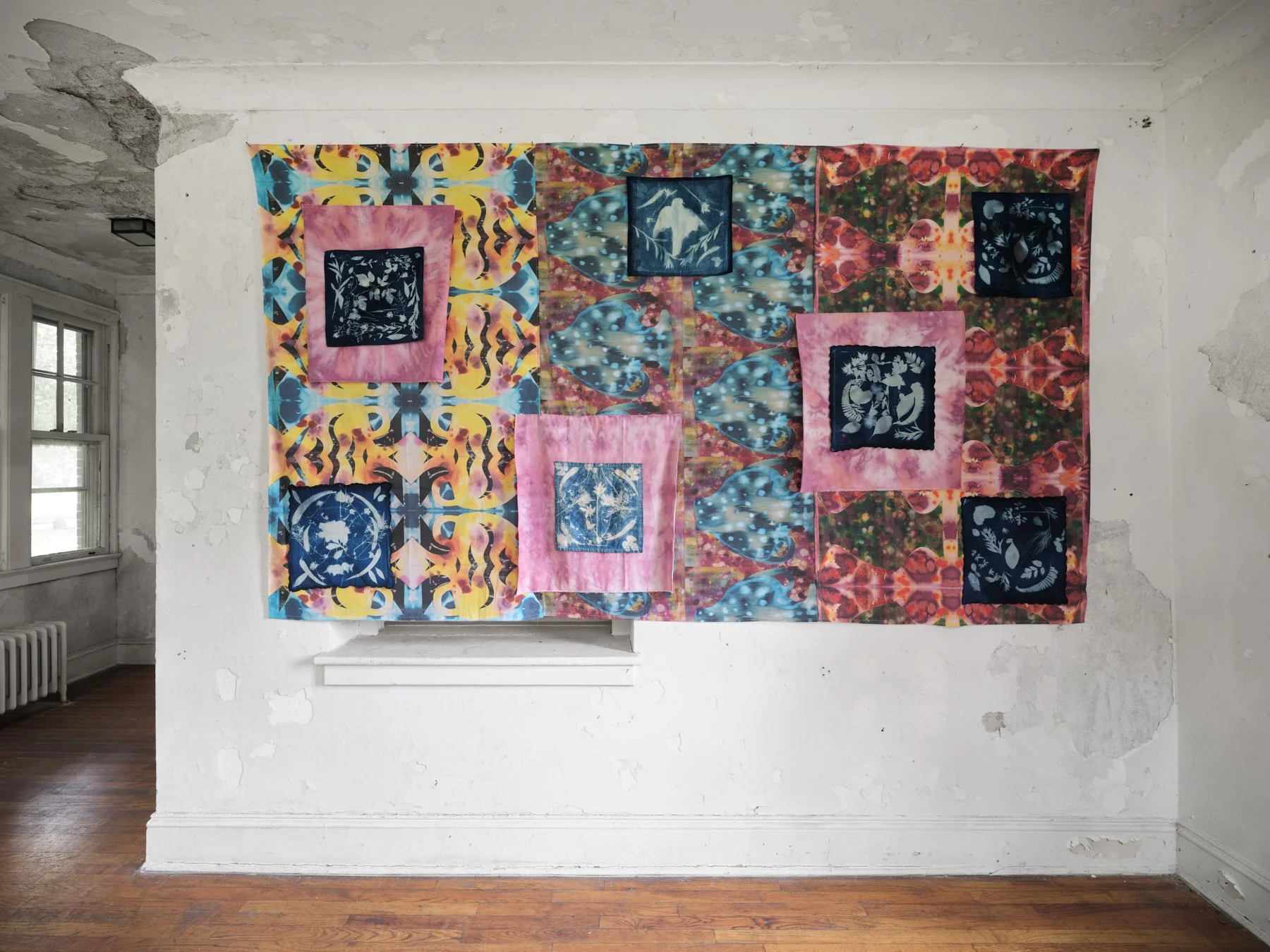
In the dining room, the form of the vessel is interrogated further. A throughline of these forms is flatness. Their shape implies an inability to hold, but the treatment of each vessel feels precious. This tension points at something important that is intrinsic to the emblem itself rather than its functionality. A soil thick with promise and its ceramic complements create the debate of whether it is containing or it simply is. Ancestral Longing provides a potential look at what the vessel can hold. This tapestry depicts flora native to New York alongside the Monarch butterfly (a symbol associated with migration). The title, Ancestral Longing, leads to believe that although the vessel is full, this may be more of a hope or a wish than a reality
Upstairs, this room explores Nakazawa’s relationship to portraiture and its different manifestations. Referencing cultural patterns, archival images, and emblematic forms, these collaged elements transform into personified myths. These stories force us to confront our own relationships to these emblems and their histories. The works from the New Pointillism series highlight the effects of cultural tourism on those in the diaspora. Similarly, Obtrait: La Migración, does that through a more macro lens, highlighting that same strain through a ritual. Using poetic search terms on museum collection databases, Nakazawa reconfigures the archives into a collage that confronts the stolen nature of these objects through intimacy and wayfinding.
From weavings to crafts and traditions woven into personal narratives, Nakazawa’s work laces together seemingly disparate parts into stories that interrogate migration, its institutions, and its cultural byproducts. This show reminds us of our entanglements to these larger structures through meditations on our day-to-day environments (both natural and built).
Statement written by Gino Romero.
Images courtesy of KODA. Photos by Argenis Apolinario.